

If you’ve ever searched for All-on-4 dental implants near me and wondered whether your smoking history disqualified you before you even picked up the phone, you’re not alone. It’s one of the most common questions Dr. Steven Park hears from patients across the Nashville area. And the honest answer is more nuanced than a simple yes or no.
Many smokers can still qualify for All-on-4 dental implants, but smoking does increase the risk of complications and implant failure. Whether you’re a candidate depends on your level of tobacco use, your overall health, and the current density of your jawbone. A thorough evaluation with an experienced prosthodontist is the only way to know for certain.
Here’s what every smoker considering All-on-4 should understand before making a decision.
How Does Smoking Affect Dental Implants?
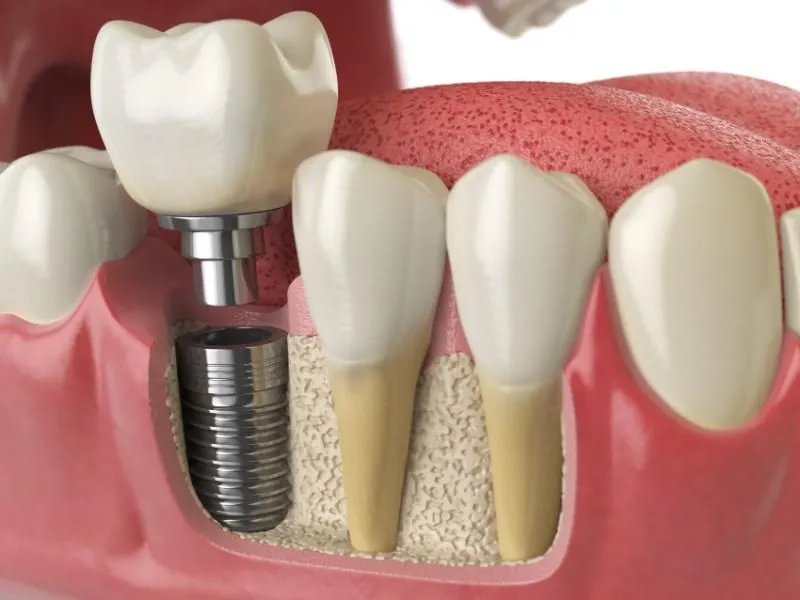
Tobacco use affects the body in ways that directly impact implant outcomes. Smoking reduces blood flow to the gums and bone, which slows the healing process after surgery. It also impairs your immune response, making it harder for your body to fight the bacteria that can cause peri-implantitis (gum inflammation around the implant site). And it interferes with osseointegration, the process by which the titanium implant fuses with your jawbone over several months.
These aren’t minor considerations. Peer-reviewed dental research consistently shows that smokers have meaningfully higher implant failure rates than non-smokers. While the baseline failure rate for All-on-4 sits at approximately 2-5%, smoking can increase that risk, particularly during the critical early months of healing.
Are Smokers Automatically Disqualified from All-on-4?
No. Heavy, uninterrupted smoking is a risk factor, not an automatic disqualification. Many patients who smoke moderately, are willing to stop or significantly reduce around the time of surgery, or have strong bone density and otherwise good health remain viable candidates.
Patients more likely to be advised against the procedure are those who smoke heavily and are unwilling to pause, who have significant bone loss compounded by smoking-related tissue damage, or who have additional health conditions that, combined with tobacco use, elevate risk further.
The conversation about smoking and candidacy is always patient-specific.
What Can Nashville Patients Do to Improve Their Chances?
The most effective step a smoker can take is to quit before surgery. Most prosthodontists recommend stopping at least two weeks prior to the procedure and abstaining for a minimum of eight weeks post-surgery.
Research shows that patients who quit around the time of implant surgery achieve success rates significantly closer to those of non-smokers. Even reducing consumption substantially, if a full quit isn’t possible right away, makes a measurable difference in healing and integration. Patients who continue smoking after surgery face a notably higher risk of late-stage complications, including peri-implantitis and bone loss around the implant site.
Finding the Right Provider for All-on-4 Dental Implants Near Me
At Same Day Smiles Nashville, candidacy for full mouth dental implants near me is never decided based on a single factor. Every evaluation includes a 3D cone-beam CT scan to assess your bone density and jaw structure in precise detail.
Smoking history is part of that conversation, but so is the complete picture of your oral health, your overall health, and your commitment to the recovery process. Dr. Park trained under Dr. Paulo Malo (the inventor of the All-on-4 technique) and has placed more than 6,000 implants. He can give you an honest, individualized assessment rather than a generalized answer.
If you smoke and have been told you might not be a candidate for implants, or if you simply want to know where you stand, a consultation at Same Day Smiles is the right next step.